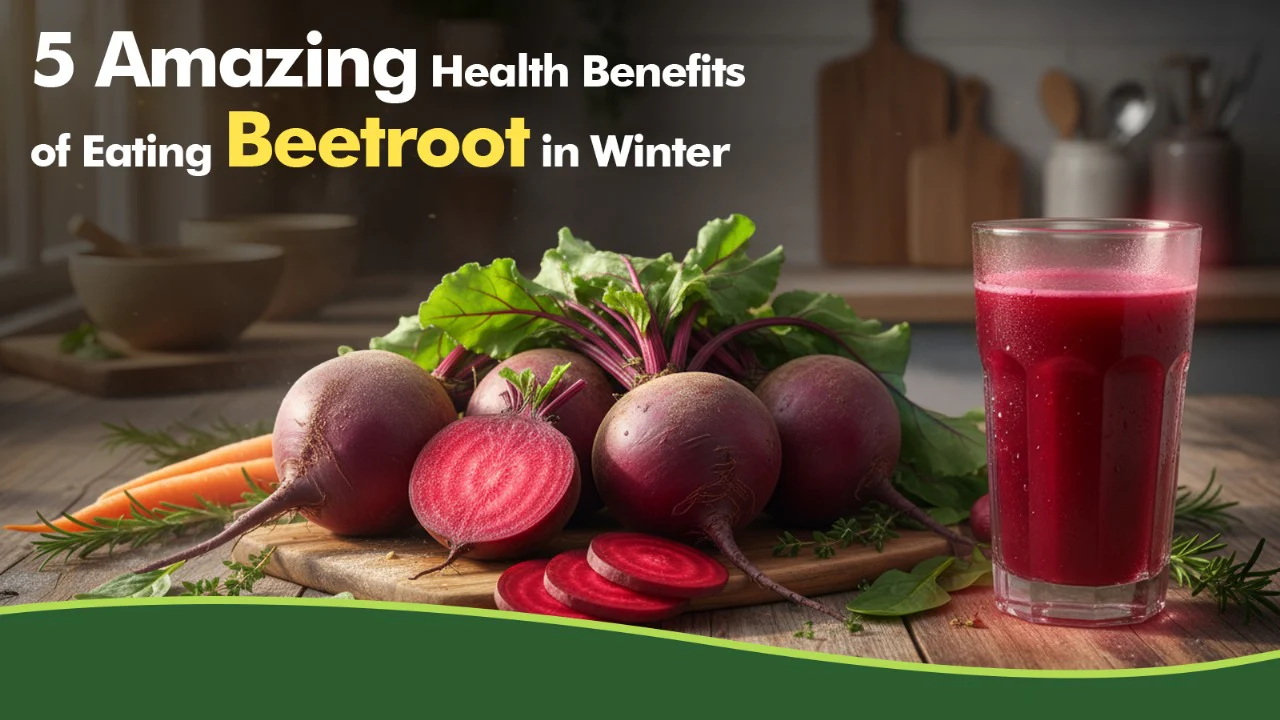
As winter sets in, people naturally become more mindful of their food choices to stay healthy and energetic. Cold weather often brings problems like low immunity, digestion issues, dull skin, and fatigue. Including seasonal, nutrient-rich foods in your diet is one of the easiest ways to stay fit—and beetroot is one such winter superfood.
Sweet in taste and rich in nutrients, beetroot is widely consumed in Indian winters. Packed with vitamins, minerals, fiber, and antioxidants, it supports overall health and helps the body adapt better to cold weather.
Let’s explore five powerful health benefits of eating beetroot in winter.
Why Beetroot Is Ideal for Winter
Beetroot naturally grows well in cooler climates and provides nutrients the body needs during winter. It is rich in vitamin C, iron, folate, potassium, and antioxidants, which help strengthen immunity and protect against seasonal illnesses like cold and flu.
1. Strengthens Immunity
Winter often weakens the immune system, making the body prone to infections. Beetroot contains antioxidants and vitamin C that help boost immunity and protect the body from viral infections
How to Consume:
- Eat boiled or steamed beetroot as a salad
- Drink beetroot juice mixed with carrot or apple
2. Supports Heart Health and Controls Blood Pressure
Beetroot is rich in natural nitrates, which convert into nitric oxide in the body. This helps relax blood vessels, improves blood circulation, and supports healthy blood pressure levels.
Why Helpful in Winter:
- Cold weather reduces physical activity, which can slow blood flow. Beetroot helps maintain healthy circulation naturally.
⚠️ If you are on blood pressure medication, consult your doctor before consuming beetroot juice daily.
3. Improves Skin Health and Natural Glow
Dryness, dullness, and acne are common winter skin issues. Beetroot nourishes the skin from within due to its vitamin C, folate, and potassium content, helping improve complexion and reduce breakouts.
Usage Tip:
- Add beetroot to salads
- Drink a small glass of beetroot juice regularly
4. Aids Digestion and Detoxification
Winter diets often include heavy and spicy foods, which can slow digestion. Beetroot contains dietary fiber and betalains that support digestion, reduce inflammation, and help detoxify the body.
Winter-Friendly Tip:
- Lightly steam beetroot before eating to make it easier to digest.
5. Helps Fight Anemia and Boosts Energy
Feeling lazy or low on energy during winter is common. Beetroot supports red blood cell production due to its iron and folate content, improving oxygen supply and reducing tiredness.
Best Way to Eat:
- Consume beetroot as a vegetable or salad 2–3 times a week for sustained energy.
- Precautions While Consuming Beetroot
- Excess consumption may increase the risk of kidney stones due to oxalates
- Too much beetroot juice can cause gas or stomach discomfort
- Red or pink urine/stool after consumption is normal and harmless
- People with low blood pressure should consume in moderation
- Pregnant women or kidney patients should consult a doctor
- Easy Ways to Include Beetroot in Winter Diet
- Salad: Boiled beetroot with lemon, salt, and pepper
- Vegetable: Lightly sauté with spinach or carrots
- Juice: Blend beetroot, carrot, lemon, and water (no added sugar)
- Skin Care: Mix beetroot juice with honey or yogurt as a face mask
Conclusion
Adding beetroot to your winter diet is a simple and effective way to boost immunity, improve heart health, support digestion, enhance skin glow, and increase energy levels. While beetroot offers numerous benefits, moderation and balance are key. Always consult a healthcare professional if you have existing health conditions.