
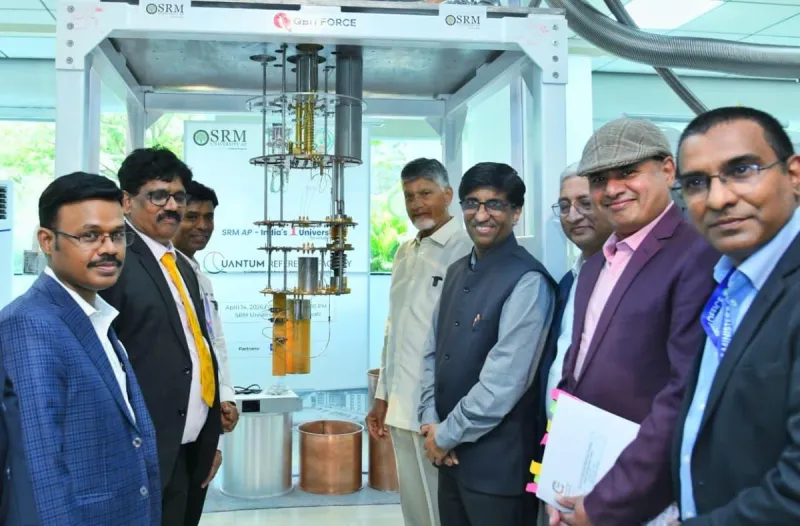
Revolutionizing Quantum Research in India
In a groundbreaking initiative aimed at propelling India to the forefront of quantum technology, Andhra Pradesh Chief Minister N. Chandrababu Naidu has inaugurated the country’s first open-access quantum reference facilities in Amaravati. This significant development, which includes the Amaravati 1S facility at SRM University and the Amaravati 1Q facility at Medha Towers, is set to catalyze research and innovation in the burgeoning field of quantum computing.
These state-of-the-art facilities will provide researchers and companies with the necessary infrastructure to test and certify quantum hardware, marking a pivotal moment in India’s technological landscape. As quantum technology continues to evolve, the establishment of such facilities is crucial for fostering a robust ecosystem that supports both academic and industrial advancements.
Understanding Quantum Technology and Its Importance
Quantum technology leverages the principles of quantum mechanics to develop new technologies that can outperform classical counterparts in various applications. This includes quantum computing, quantum cryptography, and quantum sensing. The implications of quantum technology are vast, promising breakthroughs in fields such as medicine, finance, and artificial intelligence.
By establishing open-access facilities, Andhra Pradesh is positioning itself as a hub for quantum research, enabling collaboration between academia and industry. This initiative is not only about technological advancement but also about building a skilled workforce capable of driving future innovations.
Key Features of the Amaravati Quantum Facilities
- Open-Access Model: Designed to be accessible to researchers and companies across India, fostering collaboration and innovation.
- Advanced Testing Capabilities: Equipped with cutting-edge technology to test and certify quantum hardware, ensuring reliability and performance.
- Research Collaboration: Encourages partnerships between academic institutions and industry players to accelerate quantum research.
- Training and Development: Aims to provide training programs for students and professionals, enhancing skills in quantum technologies.
Impact on Research and Development
The launch of these facilities is expected to have a profound impact on research and development in quantum technologies. By providing a platform for testing and certification, the Amaravati facilities will help streamline the development process for quantum hardware, which is often fraught with challenges due to the complex nature of quantum systems.
Moreover, the open-access model will democratize access to advanced quantum research resources, allowing smaller companies and startups to participate in cutting-edge research without the prohibitive costs associated with developing their own facilities.
Potential Applications of Quantum Technology
Quantum technology holds the potential to revolutionize numerous sectors. Some of the key applications include:
- Healthcare: Quantum computing can enhance drug discovery and personalized medicine by simulating molecular interactions at unprecedented speeds.
- Finance: Quantum algorithms can optimize trading strategies and risk assessment, leading to more efficient financial markets.
- Cryptography: Quantum cryptography offers unbreakable encryption methods, ensuring secure communication in an increasingly digital world.
- Artificial Intelligence: Quantum computing can significantly improve machine learning algorithms, enabling faster data processing and analysis.
Future Prospects for Quantum Research in India
The establishment of open-access quantum reference facilities in Amaravati is just the beginning. As India seeks to strengthen its position in the global technology landscape, further investments in quantum research and development will be essential. The government’s commitment to fostering innovation through such initiatives is commendable and lays the groundwork for a vibrant quantum ecosystem.
In addition to the facilities in Amaravati, there is potential for similar initiatives across other states, creating a network of quantum research hubs. This would not only enhance collaboration but also attract international partnerships, further boosting India’s reputation as a leader in quantum technology.
Challenges Ahead
While the launch of these facilities is a significant milestone, several challenges remain. The field of quantum technology is still in its infancy, and there is a pressing need for skilled professionals who can navigate the complexities of quantum systems. Additionally, securing funding for ongoing research and development will be crucial to sustain momentum.
Furthermore, as quantum technology evolves, ethical considerations regarding its applications must also be addressed. Ensuring that advancements in quantum computing and cryptography are used responsibly will be vital for maintaining public trust and security.
Conclusion: A Leap Towards Quantum Excellence
The inauguration of India’s first open-access quantum reference facilities in Amaravati marks a transformative step towards establishing the country as a leader in quantum technology. With the potential to drive innovation across various sectors, these facilities will not only enhance research capabilities but also foster collaboration between academia and industry. As India embraces the quantum revolution, the future looks promising, paving the way for groundbreaking advancements that could redefine technology as we know it.