
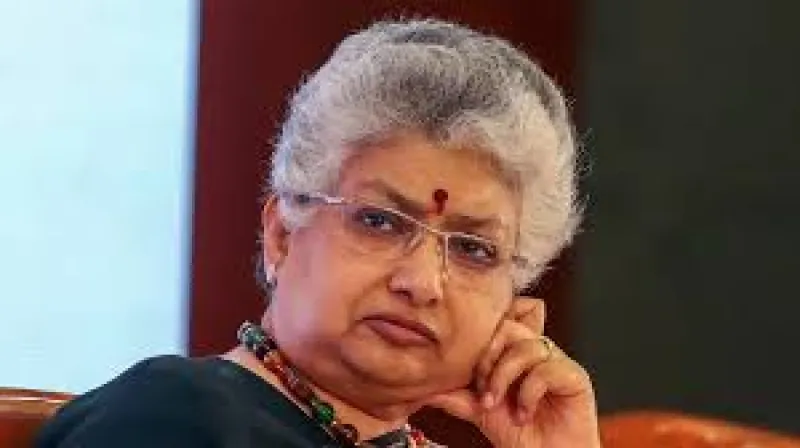
Justice Nagarathna's Remarks in Sabarimala Case
In a significant legal discourse surrounding the Sabarimala temple case, Justice B.V. Nagarathna emphasized that women should not be regarded as 'untouchables' during their menstrual cycle. This statement came during a hearing where the Supreme Court was deliberating on the 2018 ruling that allowed the entry of women of all ages into the Sabarimala temple in Kerala, which had previously barred menstruating women from entering.
Context of the Sabarimala Case
The Sabarimala temple has been at the center of a contentious debate regarding gender equality and religious practices in India. The Supreme Court's 2018 verdict aimed to dismantle the longstanding tradition that restricted the entry of women aged between 10 and 50 years, citing the temple's customs. However, this ruling faced opposition, leading to ongoing legal challenges.
Government's Stance
- The Central Government has raised objections to the 2018 ruling.
- It argues that the comparison between the Sabarimala restrictions and the practice of untouchability is inappropriate.
- Solicitor General Tushar Mehta stated that India's societal structure is not as patriarchal as perceived in the West.
Justice Nagarathna's Perspective
Justice Nagarathna's comments reflect a broader understanding of women's rights and societal norms in India. She articulated that viewing women as 'untouchables' during menstruation is a regressive notion that undermines their dignity and rights. Her remarks highlight the need for a progressive interpretation of religious practices in the context of contemporary gender equality.
Implications of the Case
The ongoing legal battle over the Sabarimala temple entry has significant implications for women's rights in India. The case not only addresses the specific issue of temple entry but also raises questions about the intersection of religion, tradition, and gender equality.
Broader Impact on Women's Rights
- Potential changes in laws regarding women's access to religious sites.
- Influence on public perception of menstruation and women's health.
- Encouragement for further legal challenges against discriminatory practices.
Current Legal Proceedings
The Supreme Court is currently reviewing the arguments presented by both the Central Government and the petitioners advocating for women's rights. The outcome of this case could set a precedent for future legal interpretations of gender equality in religious contexts.
Conclusion
Justice Nagarathna's assertion that women cannot be seen as 'untouchables' during menstruation marks a pivotal moment in the Sabarimala case. As the Supreme Court continues to deliberate on this matter, the implications for women's rights and religious practices in India remain profound and far-reaching.