
Introduction
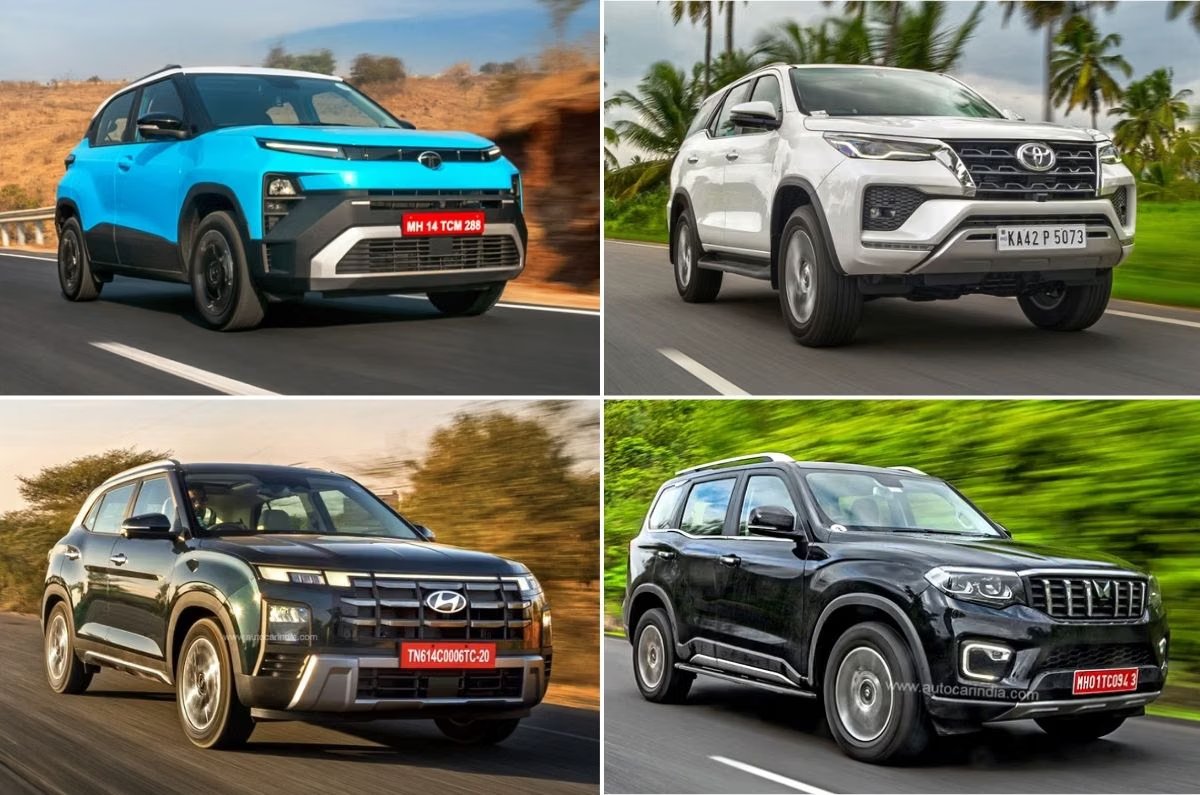
SUVs have emerged as the most sought-after vehicle body style in India, with sales figures reflecting their popularity. In 2025, six out of the ten best-selling cars in the country were SUVs. This article delves into five key SUV segments, highlighting the top-selling models based on sales data for the year 2025. The analysis includes all powertrains offered by each model, encompassing both internal combustion engines (ICE) and electric variants.
Sub-Compact SUV Segment
The Tata Punch has established itself as a leader in the sub-compact SUV segment. Known for its aggressive pricing and feature-rich offerings, the Punch has gained significant traction among Indian consumers. It features both petrol and CNG options, appealing to a wide audience. Notably, the Punch topped the passenger vehicle sales charts in 2024, breaking Maruti Suzuki's long-standing dominance.
Key Features
- Aggressive pricing strategy
- Feature-rich package
- Safety-focused design
- Available in petrol and CNG variants
- Turbo-petrol powertrain introduced in 2025
Sales Figures
- Tata Punch: 1,73,502 units
- Hyundai Exter: 67,908 units
Compact SUV Segment
In the compact SUV category, the Tata Nexon leads the market. Like the Punch, the Nexon is recognized for its extensive features and impressive safety ratings. It was the first Indian car to achieve a full five-star rating from Global NCAP in 2018. The Nexon also stands out as the only model in its segment to offer a CNG kit paired with a turbo-petrol engine.
Key Features
- Rich features list
- Five-star Global NCAP safety rating
- Turbo-petrol engine with CNG option
- Competitive pricing due to GST rate revisions
Sales Figures
- Tata Nexon: 2,00,559 units
- Maruti Fronx: 1,79,894 units
- Maruti Brezza: 1,75,310 units
- Hyundai Venue: 1,15,355 units
- Mahindra Bolero + Bolero Neo: 1,04,047 units
- Kia Sonet: 1,03,879 units
- Mahindra XUV 3XO: 1,00,029 units
Midsize SUV Segment
The midsize SUV segment, often referred to as the "Creta class," is led by the Hyundai Creta. Despite facing competition, the Creta continues to dominate sales, selling nearly double the units of its closest competitor, the Maruti Grand Vitara. The segment has seen the return of models like the Tata Sierra and Renault Duster, which may impact the Creta's market share in the future.
Sales Figures
- Hyundai Creta: 2,01,122 units
- Maruti Grand Vitara: 1,04,209 units
- Toyota Hyryder: 85,710 units
- Kia Seltos: 71,200 units
Executive SUV Segment
In the executive SUV category, the Mahindra Scorpio Classic and Scorpio N have emerged as the top sellers. While they may not be as feature-rich as some competitors, their strong demand is evident. Mahindra does not disclose separate sales figures for the Classic and Scorpio N, but their combined sales make them the best-selling models in this segment.
Sales Figures
- Mahindra Scorpio N + Scorpio Classic: 1,76,988 units
- Mahindra XUV700 (pre-facelift model): 80,704 units
Premium SUV Segment
Lastly, the premium SUV segment is dominated by the Toyota Fortuner, which remains the standard-bearer in this category. With a price range from Rs 34.16 lakh to Rs 49.59 lakh (ex-showroom), the Fortuner averages around 2,900 units sold per month, showcasing its strong market presence. The nearest competitor, the Skoda Kodiaq, sold only 1,477 units, highlighting the Fortuner's dominance.
Sales Figures
- Toyota Fortuner: 34,716 units
- Skoda Kodiaq: 1,477 units
Conclusion
The SUV market in India continues to thrive, with various segments showcasing strong sales figures. The Tata Punch, Nexon, Hyundai Creta, Mahindra Scorpio, and Toyota Fortuner have emerged as leaders in their respective categories, reflecting the growing consumer preference for SUVs. As competition intensifies, these models are likely to evolve further to meet the demands of Indian consumers.